
Mohnish Pabrai

Quick background and history
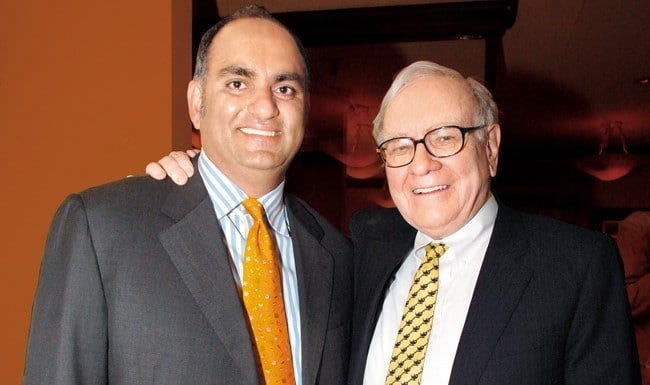
Mohnish Pabrai is a close friend of Buffett and Munger and is a very underrated investor. He admits to mimicking the investing styles of Buffett of Joel Greenblatt and has had tremendous success. Pabrai worked with Tellabs which is a leader in fiber-based technologies between 1986–91, first in its high-speed data networking group, and then in 1989, joined its international subsidiary, working in international marketing and sales.
In 1991 he started his IT consulting and systems integration company, TransTech, Inc. with about US$30,000 from his own 401(k) account and US$70,000 from credit card debt. He sold the company in 2000 to Kurt Salmon Associates for US$20 million. Today he is the managing partner of the Pabrai Investment Funds, a family of hedge funds inspired by Buffett Partnerships, which he founded in 1999.
5 types of business that he believes can lead to a multi-bagger investment
Focused Mousetraps: Narrowly focused players with long runways (e.g Costco, Chipotle, McDonald’s)
Great Capital Allocators: Such as Berkshire and Danaher
Uber Cannibals: Intense focus on buybacks. “The pie may not grow, but your share of it will”.
Deeply Undervalued Players
Spawners: Companies that continuously spawn related and unrelated businesses such as Amazon and Meta
Pabrai also utilizes something that he calls the Dhandho Framework
He describes it by saying "Heads, I win. Tails, I don’t lose much.”
The purpose of this strategy is to locate opportunities with considerable upside and limited downside. High reward, low risk.
The lessons I learned from him:
Focus on buying an existing business
Buy simple businesses in industries with an ultra-low rate of change
Buy businesses with a durable competitive advantage
Bet heavily when odds are overwhelmingly in your favor
Buy businesses at big discounts to their value
Look for low-risk and high-certainty businesses
The lesson I disagreed with: It’s better to be a copycat than an innovator
What I learned about the questions I should be asking before an investment:
Is it a business that I understand very well?
Do I know the real value of the business today, and with high confidence, know how it's going to change over the next few years?
Is the business priced at a large discount to its actual value today and in two to three years?
Would I be willing to invest a large part of my net worth into this business?
Is the downside minimal?
Does the business have a moat?
Is it run by honest and competent managers?
Notes and quotes:
Mistakes are the best teachers. One does not learn from success. It is desirable to learn vicariously from other people's failures, but it gets much more firmly seared in when they are your own".
There is no greater teacher your own failings.
"Einstein recognised the power of simplicity. He noted that the five ascending levels of intellect were Smart, Intelligent, Brilliant, Genius, Simple".
The greatest sign of intellect is the ability to make the complex appear simple.
"Wall Street sometimes gets confused between risk and uncertainty, and you can profit handsomely from that confusion".
"You don’t make money when you buy stocks. And you don’t make money when you sell stocks. You make money by waiting".
The hardest part is keeping your emotions in check between buying and selling your investments
"If I were too proud to copy the ideas of others, I likely wouldnt have even a fraction of my current success".
Being original is overrated
"The businesses that are monopolies, typically go to some serious lengths, to try to convince you that they are not a monopoly and the competitive ones will try to convince you that they have all these competitive advantages".
Focus not on what they say but what they do
"Read voraciously and wait patiently, and from time to time these amazing bets will present themselves."
Nothing can substitute patience and conducting your own research.
"I don't look for reasons to buy a given business. I look for reasons to reject buying the stock. I'm looking for why should I turn it down".
Thoughts:
It is very clear that Pabrai is a man of patience and confidence. One quote that stood out to me was him saying "You don’t make money when you buy stocks. And you don’t make money when you sell stocks. You make money by waiting". I find this very true and a topic that isn’t spoken about often. However, the waiting phase only comes when you are confident about the decision you made on your investment and aren’t afraid of the period where you are losing money it. He further continues by saying that patience doesn’t have any replacements and that the best way of getting information on different companies is only through your own research.
He also seems like a very righteous and humble person. He has no hesitancy mentioning that he has copied from Buffet and Munger many times and that he wouldn’t have been successful without them. He even says It’s better to be a copycat than an innovator. From this quote, I can get an insight into what type of guy Pabrai is. I assume that although he wants to be successful, he doesn’t want to take the hard route for it and likes all of the answers to be ready. At the same time, he is a very patient guy based on his other sayings so he waits until his investments end up becoming profitable without him doing any of the hard work.
On the other hand, he believes that the best way to research a company is on your own. What this tells me is that although he doesn’t want to come up with anything new, he also doesn’t copy other investors without doing his own research. Once he has researched all of the information that he needs and they also matchup with what other investors have said, he then makes the trade.
The second quote that stood out to me was him saying I don't look for reasons to buy a given business. I look for reasons to reject buying the stock. I'm looking for why should I turn it down. He looks for more wrongs than rights which I believe to also be one of the key fundamentals to his success. On top of this, he likes to make everything very simple. He says the greatest sign of intellect is the ability to make the complex appear simple. By making things simple, you have to have an understanding of the topic so well that you can explain it even to a kid. This is how I believe his understanding of the companies he's investing in to be. Although he gets his ideas from other people, he doesn’t do any less work than them researching the company and making sure that he knows the top to bottom of the company he is investing in.